
The first person widely recognized as the first computer programmer, is actually a women named Ava Lovelace. Inspired by Lovelace, many other famous women in computer science have risen past challenges equipped in their male-dominated field. Their contribution to computer science has graced us with the privilege of learning coding, programming, software development, and more, at a pace and level that is more digestible.
According to ComputerScience.org, the percentage of modern computer science female professionals is only 20%. This number continues to grow as STEM and CS are promoted to girls at a younger age. However, in this article you will see how the impact women have made in computer science greatly outweighs that small percentage.
Today, we'll discuss the works of 15 famous women in technology. Here are a few household names to know! If you're ready to begin your own computer science journey, be sure to check out our award-winning free coding classes for kids designed by Google and Stanford experts. Most students start with our fun beginner-friendly Scratch coding class, where they learn to make cool games!
Discover Famous Women in Computer Science
Here are some of the women to know who have made their mark in the history of computer programming and development.
Who is a significant female computer scientist?
You’ve probably heard of the name Grace Hopper before. The Grace Hopper Celebration, the largest 3-day gathering of women in tech, was named after her. Grace Murray Hopper, also known as “Amazing Grace,” made history by being one of the first programmers for the Harvard Mark 1 and developing a compiler that would later be used to create the COBOL programming language.
High-level programming languages such as COBOL can seem daunting at first; which is why getting your feet wet in an easier programming language such as HTML would help ease the process of understanding how programming works. The average time for new learners to learn HTML is actually within two weeks.
You can find a short video discussing the life of Grace Hopper Here!
Who is the first female programmer in the history of computer programming?
The first female programmer in the history of computer science is Ada Lovelace. She was born in 1815 in London and is known as a pioneer in computer programming. She was in charge of creating applications for the Analytical Engine, which is considered the world’s first general computer. The high-level programming language named Ada was named after her. She was also the first to foresee that computers could extend beyond pure calculation, envisioning applications in music and art.
Famous Women in Technology
Along with the information above about Grace Hopper and Ada Lovelace, you will find important information about 15 other famous women in technology! There are countless others who have made contributions to CS as well.
1. Frances Elizabeth Allen - Computer Scientist/ Math Teacher
Frances Elizabeth Allen was passionate about teaching and received her B.A. in mathematics and minor in physics at the State University of New York at Albany. She went on to receive her master's at the University of Michigan to become fully certified in teaching.
Allen then joined IBM to teach the programming language FORTRAN. Afterward, she spent most of her career at IBM helping to develop compiler techniques that created the foundation of modern-day automatic parallel execution and modern optimizing compilers.
2. Joan Clark - Cryptanalyst and Numismatist
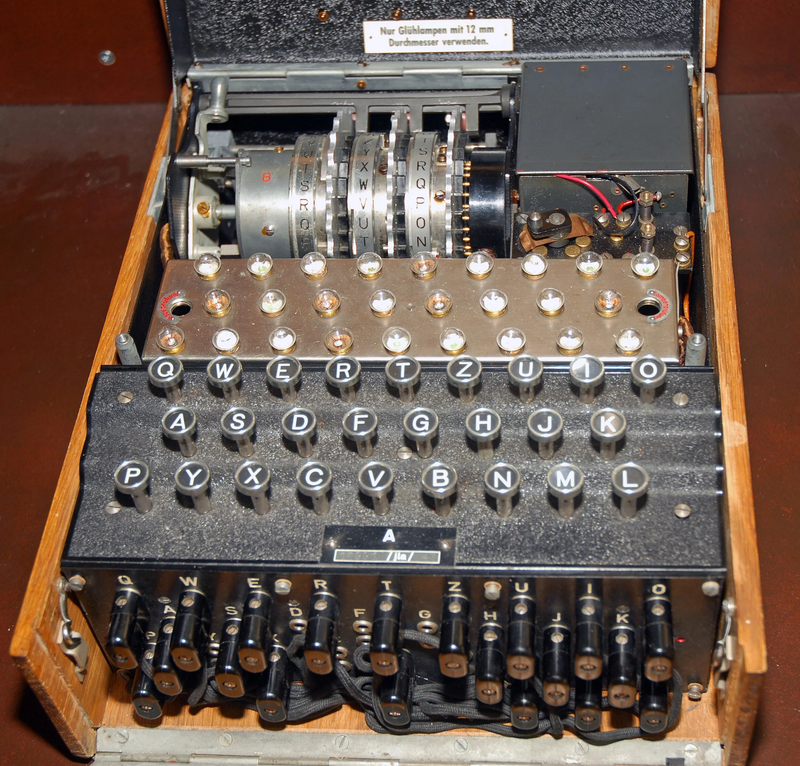
Joan Clarke was an English cryptanalyst and numismatist who was recruited to the Government Code and Cypher School and stationed to work at Bletchley Park in the section known as Hut 8. She was the only female practitioner of Banburismus, an essential cryptanalytic process developed by Alan Turing.
Clarke is best known as a masterful codebreaker who played an important role in the Enigma project during World War II, decrypting Nazi Germany’s secret naval communications and saving countless lives.
3. Margaret Heafield Hamilton-Computer Scientist, Systems Engineer
Margaret Hamilton is a computer scientist and systems engineer who served as the director of the Software Engineering Division at the MIT Instrumentation Laboratory. Before leading the software development for the Apollo Space Program, she worked as a programmer writing weather-prediction and tracking software on the SAGE project.
Hamilton’s focus on legitimizing the discipline of software development is the reason why she is credited with coining and popularizing the term "software engineering." Her rigorous engineering principles and focus on asynchronous executive processing prevented a critical system overload during the Apollo 11 moon landing.
4. Edith Clark - Electrical Engineer
Edith Clark paved the way for all women in electrical engineering by becoming the first female for almost everything in the electrical engineering field. She was the first woman to earn an MS in electrical engineering from MIT, the first woman to be professionally employed as an electrical engineer in the U.S., and the country's first female professor of electrical engineering, teaching at the University of Texas at Austin.
Clark specialized in electrical power system analysis and was also the first woman to present her paper at the American Institute of Electrical Engineers. Clark’s paper presented a solution to help create large efficient systems for transmission lines.
5. Carol Shaw - Video Game Designer
Carol Shaw is one of the first female game designers and programmers in the video game industry. This field was largely dominated by males previously. When working at Atari, Shaw was regarded as one of the best programmers where she designed games such as 3-D Tic Tac Toe.
Shaw’s best known for her work on River Raid for the Atari 2600. The game’s complex design was a tricky hurdle for the Atari 2600 to handle. Shaw’s masterful game design skills allowed her to create a masterpiece for the game. She was able to pave the way for future women in gaming.
6. Ida Rhodes - Mathematician
Ida Rhodes, also known as Hadassah Itzkowitz, is a mathematician who is part of an influential group of women in early computer development. She earned her B.A. and M.A. in mathematics at Cornell University and joined the Mathematics Tables Project shortly after.
Rhodes was one of the first developers in the analysis of systems for programming. Along with her colleague, she designed the C-10 programming language. Rhodes was later on awarded the Gold Medal for her contribution to pioneering the functional design and applications of electronic digital computing equipment.
Female Computer Programmers
7. Anita Borg - Computer Scientist, Women’s Activist
Anita Borg was not only a computer scientist, but she was also a huge advocate for advancing women in programming. She graduated from New York University with a Ph.D. in computer science and co-founded Systers, an online community for women to discuss their experiences at work.
In 1994, she co-founded the Grace Hopper Celebration. Borg was able to create the Institute for Women in Technology, which provided support and programs to women already in tech and those thinking of pivoting into it. Her contributions have heavily advanced the cause of women in tech.
8. Radia Joy Perlman - Programmer, Network Engineer
Radia Joy Perlman is a programmer and network engineer who developed a fascination and love for math and science at an early age. She then went on to receive her B.S. and M.S. from MIT in mathematics and later on a Ph.D. in computer science.
Perlman is known for her invention of the spanning tree algorithm and the Spanning Tree Protocol. This protocol became essential to helping network bridges locate loops in a LAN. She has made major contributions to other protocol projects such as the CLNP and has received numerous awards including the USENIX Lifetime Achievement award.
9. The ENIAC Programmers
The ENIAC Programmers is a team of six young women who worked together on the world’s first all-electronic programmable computer. Kathleen McNulty Mauchly Antonelli, Jean Jennings Bartik, Frances Snyder Holberton, Marlyn Wescoff Meltzer, Frances Bilas Spence, and Ruth Lichterman Teitelbaum were all chosen to run the ENIAC during World War 2.
They programmed from scratch because no programming language or tools existed during the time. The team mostly used logical diagrams and calculations of very complex ballistic trajectories to help the ENIAC launch accurate missile trajectories within seconds.
10. Katherine Johnson - Mathematician
Katherine Johnson was a brilliant student who attended high school at the age of 13 and became one of three black students chosen to attend West Virginia’s newly integrated graduate school. Her greatest work and accomplishments happened when she joined the National Advisory Committee of Aeronautics (NACA).
She worked on the trajectory analysis of America’s first human space flight. Johnson’s calculations made it possible to sync Project Apollo’s Orbital Module with the lunar orbiting Command and Service Module. Johnson was awarded the Presidential Medal of Freedom in 2015. You can watch the movie Hidden Figures to learn more about her work, along with countless others.

11. Karen Spärck Jones - Computer Scientist
Karen Spärck Jones studied history, philosophy, and worked as a teacher before pivoting into computer science. She proceeded to work in the Cambridge Language Research Unit where she published nine books and numerous papers.
Spärck Jones is best known for her works in combining linguistics and statistics while also advocating for women in her field. She developed the inverse documentary frequency which is a critical factor in creating modern-day search engines. The University of Huddersfield’s School of Computing and Engineering buildings was renamed in her honor.
12. Elizabeth Feinler - Information Scientist
Elizabeth Feinler studied chemistry at the West Virginia State College and pursued a Ph.D. in biochemistry at Purdue University before shifting her focus to data and information systems. She joined the Augmentation Research Center at SRI International, where she managed the Network Information Center (NIC) for ARPANET and Defense Data Network from 1972 to 1989.
Feinler and her team developed the Domain Name System (DNS) registry, introducing the structural top-level domains still used today, such as .com, .edu, .gov, .mil, and .org. She later went on to help manage the NASA Science Internet NIC, receiving the prestigious Jonathan B. Postel Service Award in 2013 for her vital contributions to the development of the internet.
Female Computer Scientists Today
13. Shafi Goldwasser - Computer Scientist
Shafi Goldwasser is a computer scientist who received her bachelor's in mathematics and science from Carnegie Mellon University and her master's and Ph.D. in computer science at the University of California Berkeley. She’s received numerous awards including the Grace Murray Hopper Award and the Turing Award.
Goldwasser is best known for her work in developing cryptosystems. She co-invented probabilistic encryption called the Blum-Goldwasser cryptosystem that helped create today’s standard for security data encryptions. She has won the Godel prize twice in theoretical computer science.

14. Adele Goldberg - Computer Scientist
Adele Goldberg was a computer scientist who worked at PARC as a laboratory and research assistant where she and her colleagues developed the Smalltalk-80. It was an innovative format that could transfer objects through applications seamlessly.
Goldberg and her team went on to introduce and develop Simula 67 which is a programming setup that overlaps windows on graphic display screens. They became the forerunners of design templates used in software design today.
15. Barbara Liskov - Computer Scientist
Barbara Liskov is an Institute Professor at M.I.T. and a computer scientist. She studied mathematics and physics at the University of California Berkeley before moving into computer science for her graduate studies. She is the first female to receive a doctorate in computer science from Stanford in the United States.
When Liskov worked at Mitre, she and a colleague developed a definition of subtyping known as the Liskov substitution principle. Her contributions to helping design program languages, methodology, and distributed systems earned her the Turing award in 2008.
Join the Famous Women in Computer Science
Amidst challenges from the overwhelming gender gap in the 1900s and even now, women have been able to persevere and create scientific breakthroughs that have allowed us to comfortably use technology today. To get even more inspired, check out some original computer science quotes.
These women have all started their journey in programming, engineering, mathematics, and more, from somewhere. Nowadays, it’s a major step to have your child involved in coding at an early age. The best online computer science classes for kids are a great and accessible resource to take advantage of. Including our award-winning free, beginner-friendly coding introduction class for Grades 2-5, designed by MIT, Google, and Stanford experts. Students in Grades 6+ will enjoy starting with our Accelerated Beginner Coding course.

